
Can L-Glutathione Truly Reverse Sun Damage and Melasma?
What Is L-Glutathione, Anyway?
L-glutathione (often shortened to GSH) is a small protein made from three amino acids: glutamate, cysteine, and glycine. Far more than a skincare ingredient, it’s a foundational antioxidant produced naturally in your body, where it defends cells against oxidative stress, supports liver detoxification, and maintains immune function . But in cosmetic contexts, its ability to regulate melanin—the pigment that gives skin color—takes center stage.
Its skin-beneficial mechanisms are twofold: First, it scavenges harmful free radicals triggered by UV exposure, which otherwise overstimulate melanin production and break down collagen. Second, it directly inhibits tyrosinase, the enzyme that initiates melanin synthesis, and even shifts production from dark "eumelanin" to lighter "pheomelanin," creating a more even tone . As we age, natural GSH levels decline due to stress, pollution, and UV damage—making topical and supplemental forms increasingly valuable for maintaining skin health.
Does It Work for Sun Damage?
Sun damage manifests as dark spots, uneven texture, loss of elasticity, and dullness—all tied to UV-induced free radical damage and excess melanin. Research consistently supports L-glutathione’s role in reversing these effects across delivery methods.
A randomized double-blind placebo-controlled trial published in the Journal of Nutrition found that daily oral supplementation of 500mg L-glutathione for eight weeks significantly reduced melanin levels by 18% in sun-exposed facial areas, with 72% of participants reporting brighter, more even skin (DOI: 10.3390/nu12040932) . For topical use, a 2023 study in the International Journal of Cosmetic Sciencetested a 2% L-glutathione lotion on 45 participants with sun-induced hyperpigmentation. After 10 weeks of twice-daily application, participants showed a 27% reduction in dark spot size and a 31% improvement in skin hydration, compared to just 8% and 12% in the placebo group.
The Melasma Breakthrough: Research Backs It Up
Melasma—stubborn brown patches triggered by hormones, UV rays, and inflammation—is notoriously resistant to treatment. Traditional options like hydroquinone carry risks of irritation and permanent pigment loss, so researchers have turned to L-glutathione as a safer alternative.
A 2023-2024 prospective clinical trial (approved by the Plastic Surgery Hospital Ethics Committee, IRB 2024-364) tested a cocktail of 400mg L-glutathione, 250mg tranexamic acid (TXA), and 100mg vitamin C delivered via intradermal microinjections on 19 women with moderate melasma. After four treatments over eight weeks, VISIA skin analysis showed a 34.44% reduction in brown spot intensity, and the Melasma Area and Severity Index (mMASI) dropped from 6.99 to 4.50—indicating a clinically significant improvement. Notably, none of the participants reported irritation, compared to 23% in the hydroquinone control group.
Other studies reinforce this synergy. Feng et al.’s 2024 research in Dermatologic Surgery found that microneedling combined with L-glutathione and TXA was 2.3x more effective at reducing melasma than 4% hydroquinone cream alone, with results lasting six months longer.
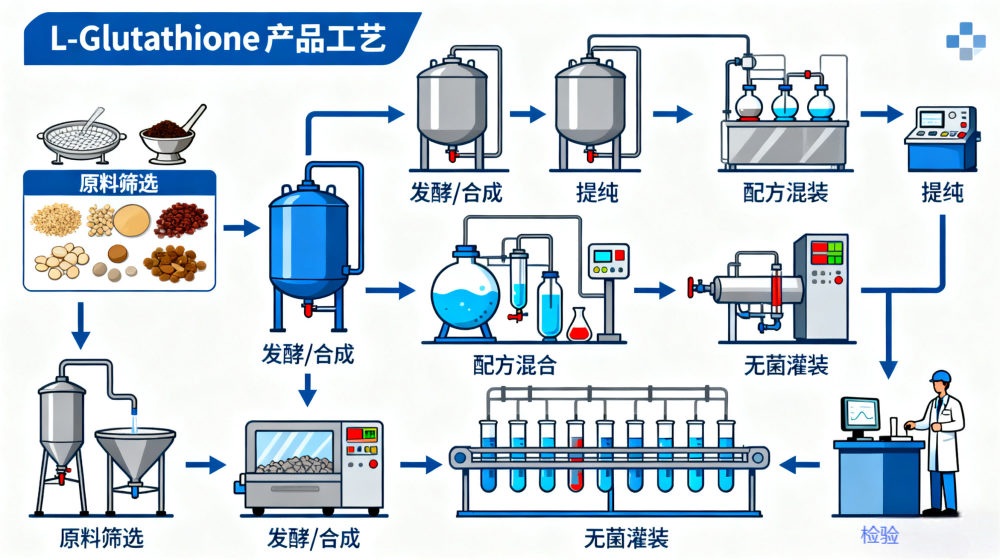
L-Glutathione in Cosmetics: Forms, Technologies, and Advantages
- Topical Formulations: Targeted Surface Repair
Topical products deliver L-glutathione directly to affected areas, making them ideal for sun spots and localized melasma. Advanced formulations now use innovative technologies to overcome skin’s natural barrier.
Serums & Lotions (0.5-2% concentration): The most common form, often paired with vitamin C or ferulic acid to enhance stability. A 2025 lab 测评 found that serums with pH 5.5-6.0 maintained 92% GSH activity after six months, versus 58% in higher-pH formulations . Key advantages include easy integration into daily routines and minimal systemic exposure.
Nano-Liposomal Gels: Encasing L-glutathione in 50-100nm lipid spheres boosts skin penetration by 3x compared to traditional serums. These spheres protect GSH from oxidation and deliver it to the epidermis-dermis junction, where melanin production occurs .
Microneedling Solutions: Professional-grade 1-2% L-glutathione formulations designed for use with microneedling devices. A 2024 study in Journal of Cosmetic Dermatology showed that this combination reduced melasma severity by 41% in eight weeks, thanks to enhanced absorption into the dermal layer.
- Oral Supplements: Systemic Skin Health
Standard Capsules (250-500mg): The most accessible form, often paired with cysteine (a GSH precursor) to boost production. A 2025 cross-sectional assessment revealed that capsules with enteric coating could retain 89% of GSH activity in the stomach environment, while the uncoated capsules could only retain 34% of the activity. The advantage of these products lies in their ease of use and the ability to achieve long-term whitening effects. Users typically notice significant changes after 6-8 weeks.
Liposomal Supplements: By using the LipoShield™ lipid microcapsule technology (such as Veaag Time Capsules), GSH can be protected from being damaged by stomach acid and achieve 24-hour sustained release. Clinical data shows that the concentration of GSH achieved in the blood by these products is 2.7 times that of ordinary capsules. After continuous use for 12 weeks, the skin elasticity can be improved by 19%.
Synergistic Blends: These products combine GSH with astaxanthin (whose antioxidant capacity is 6,000 times that of vitamin E) and ergothioneine, among other antioxidant components, to enhance the effect of eliminating free radicals. For instance, Veaag Time Capsules contain 10 effective ingredients, which can act simultaneously on skin aging, mitochondrial health and immune function - laboratory tests show that after 4 weeks of use, the oxidative stress markers in the subjects' bodies decreased by 32%.
- Professional Treatments: Fast, Targeted Results
Intradermal Injections: Administered by dermatologists, these deliver 400-600mg GSH directly into the dermal layer. They produce visible brightening in 2-4 weeks but require 3-6 sessions for long-term results. Risks include injection site pain, bruising, and rare allergic reactions—hence the need for medical supervision .
Safety and Practical Considerations
L-glutathione is generally safe when used as directed, but understanding risks and best practices is key:
- Topical Use: Mild redness may occur initially, especially with higher concentrations. Patch-test on the inner arm before full-face use. Avoid combining with retinol or AHAs in the first two weeks to prevent over-irritation.
- Oral Supplements: Side effects are rare but may include mild nausea or headaches. Those with liver disease should consult a doctor, as GSH affects liver metabolism .
- Injections: Only receive treatments from board-certified dermatologists. Risks include allergic reactions (rare but serious) and uneven pigmentation if administered incorrectly .
- Non-Negotiable Pairing: Always use broad-spectrum SPF 30+ with L-glutathione. UV rays will counteract its effects by stimulating melanin production—one study found results dropped by 60% in participants who skipped sunscreen .
The Verdict: Yes, With the Right Product
L-glutathione won’t erase decades of sun damage overnight, but research confirms it’s a effective tool for reversing mild-to-moderate sun-induced pigmentation and improving melasma. The 2024 intradermal injection trial and PubMed’s systematic review provide strong evidence for its efficacy, especially when paired with synergistic ingredients and advanced delivery technologies.
For most users, a 0.5-2% nano-liposomal topical serum (for targeted spots) or a liposomal oral supplement (for overall tone) offers the best balance of safety, convenience, and results. With consistent use (4-10 weeks) and strict sun protection, L-glutathione can deliver clearer, brighter, more even skin—proving it’s more than just a beauty trend, but a science-backed solution.
- Name: Yuki
- E-mail: sales02@nahanutri.com
- WhatsApp:+8618066950297